A team can produce more documents with AI and still leave its customers waiting. If the delay sits in approving a quote, generating the first draft faster only solves part of the problem.
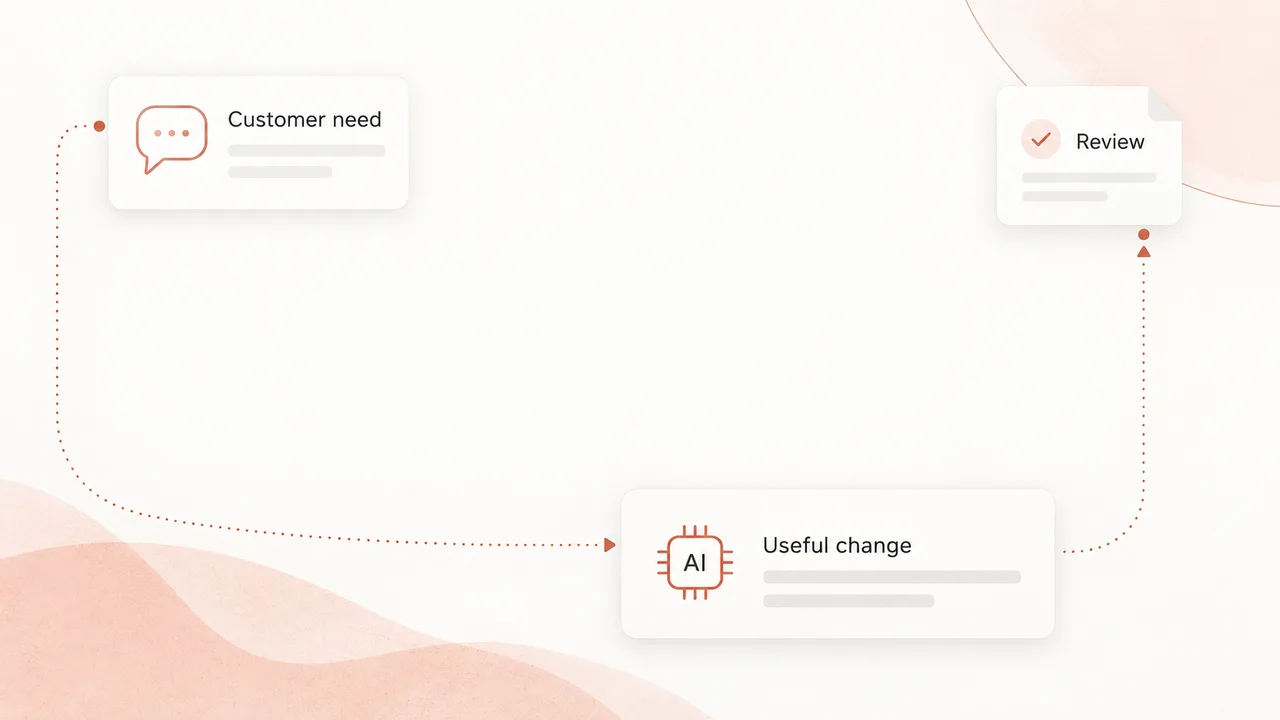
To find a worthwhile AI opportunity, connect three things: a customer need, the work that meets it, and the way your business earns money from that work. Then identify the point where better information or a faster handover could improve the result.
This guide helps you make that choice. You will finish with a small set of opportunities and a brief for testing one of them, before committing to software or a wider transformation programme.
Start with the promise your customer buys
Write down why a customer chooses you. Be specific enough that a colleague could recognise it in a recent job: a clear quote, dependable delivery, advice that accounts for an unusual situation, or one person who keeps everything moving.
Next, find where keeping that promise becomes difficult. Look at delayed orders, questions asked twice, quotes that needed corrections and work that depends on the owner’s memory. Talk to the people handling those situations. A process diagram alone will not tell you which interruptions matter.
If you already use the NICE framework to assess your business model, use that assessment as a starting point. Here, the task is narrower: identify which part of creating and delivering value could benefit from a specific AI application.
Look for value in three places
Help the customer get a better result
Consider information that helps a customer decide or move forward. A service business might prepare a clearer summary of a request, identify missing details before a site visit, or help an adviser find a relevant previous project.
The useful outcome is a better conversation or fewer avoidable delays. The AI output is only an intermediate step. A polished answer that misses an important requirement makes the service worse.
Make delivery more reliable
Follow one job from enquiry to completion. At each handover, ask what the next person needs and where that information comes from. Could a draft summary, document check or searchable set of procedures help?
For example, making approved installation guidance easier to find may be more useful than generating new instructions. Our work on accessible company knowledge starts with the information a team needs to use and check.
Improve the economics of the work
Look at the effort required to deliver a completed, accepted result. Include checking, correcting and supporting the AI-assisted process. Time spent fixing a draft belongs in the calculation.
Also distinguish capacity from cash savings. Freeing several hours may let your team respond sooner or take on more work. It does not automatically reduce payroll or create extra sales. Name how the released time would be used before putting a financial value on it.
Build a small opportunity map
Use the following example to see how those three perspectives connect. It describes an imaginary commercial maintenance company, not an Untaylored client or a measured result.
| Current problem | Possible AI contribution | Evidence of value to look for |
|---|---|---|
| Enquiries arrive with missing job details | Prepare a summary and questions for the coordinator | Fewer clarification rounds before a useful quote |
| Technicians search through old documents | Find relevant approved procedures with source links | Less search time, with the correct procedure still verified |
| Completed work reaches the office as scattered notes | Prepare a service report for the technician to check | Less correction work before a complete report reaches the customer |
These are three hypotheses. They are not three projects to start together. The company should choose the problem with a clear owner, usable information and an outcome it can observe.
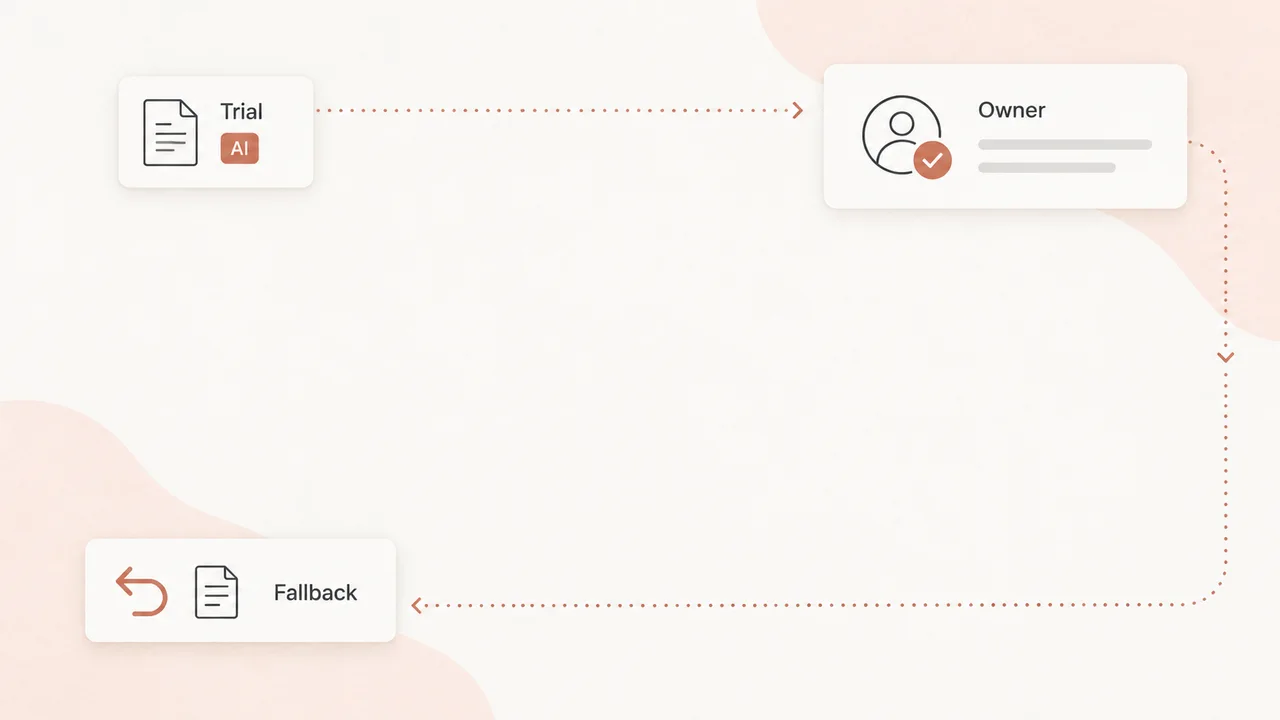
Suppose it chooses enquiry preparation. Its trial could compare the current approach with AI-prepared summaries of the same types of request. The coordinator checks both against the original messages. The decision depends on completeness and total handling effort, not how convincing the generated text sounds.
Separate an improvement from a new offer
Making a service easier to deliver and creating a new service are different business decisions.
An internal search assistant might help your team answer questions. Selling an advisory subscription built around that assistant would also require customer demand, reliable delivery, pricing and support. A working demonstration establishes none of those on its own.
Before proposing a new AI-enabled offer, speak with potential buyers about the result they need and how they solve the problem today. Test their willingness to pay through an appropriate commercial experiment. Keep that evidence separate from evidence that the technology can perform the task.
For existing services, a modest improvement may already be worthwhile. You do not need to redesign the entire business model to justify it.
Compare AI with the simpler alternative
Sometimes the best first change is one shared form, a clearer approval rule or removing a duplicate step. Include those options in the comparison.
The US National Institute of Standards and Technology’s AI Risk Management Framework playbook recommends considering non-AI alternatives and examining intended benefits against a relevant baseline. It is useful decision guidance, not evidence that a particular investment will pay off.
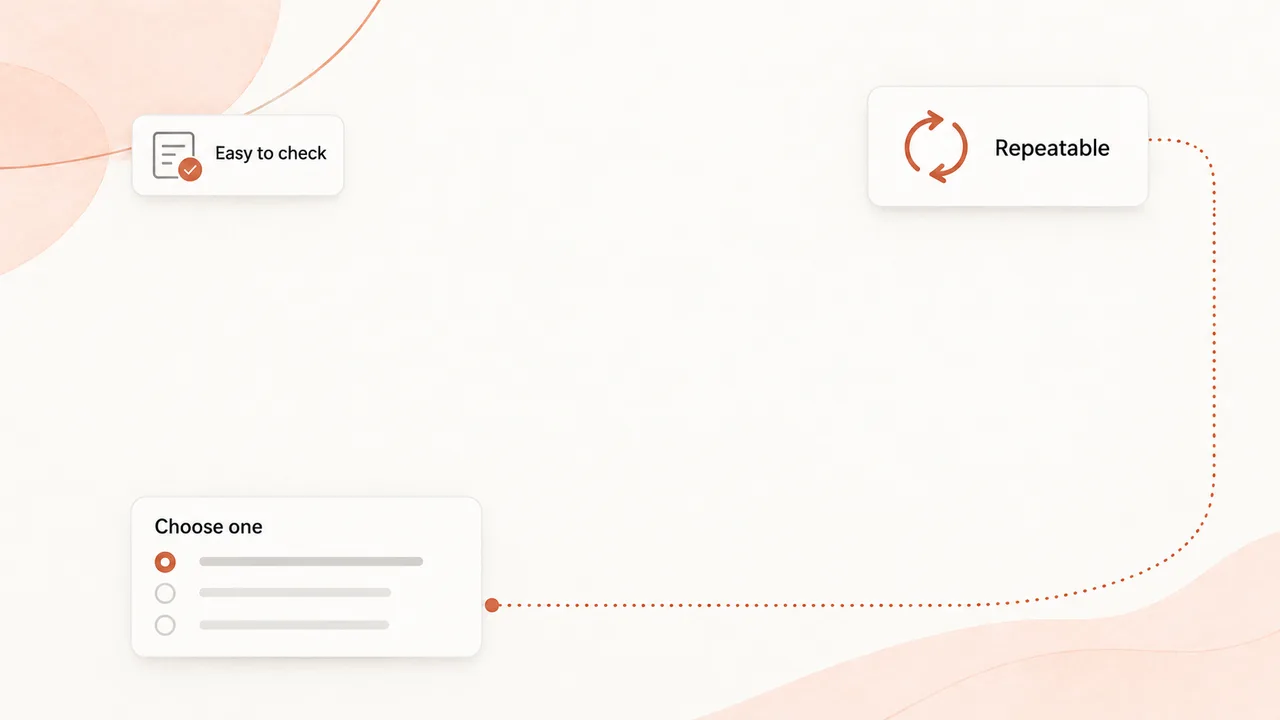
For each opportunity, ask:
- What becomes better for the customer or team?
- Could a clearer process or ordinary software rule achieve it?
- Is the necessary information available, current and appropriate to use?
- Can someone check the result without repeating all the work?
- What happens if the system produces the wrong answer or is unavailable?
An opportunity that cannot answer these questions needs more investigation. It does not need a more impressive demonstration.
Turn one opportunity into a testable brief
Write one page with the following fields: the customer or business problem, the proposed change, the current result, the information needed, the person responsible and the conditions for continuing or stopping.
Add the full expected effort: preparation, setup, software use, review and ongoing maintenance. Record uncertainties as questions to test. If volume is low or jobs differ substantially, be careful about treating a few successful examples as a reliable forecast.
Then use our guide to choosing the first process to automate to narrow the scope. Once the trial earns a place in daily work, plan its ownership and handover.
At Untaylored, this connection between business goals and everyday work shapes our AI strategy and advice. You can read more about our approach and background.
Book a demo for an introductory conversation. Bring one customer promise that is difficult to deliver consistently; that gives us a useful place to begin.